HKUST Successfully Hosted the Final Presentation and Award Ceremony for the 2026 GenAI Hackathon on Putonghua Web Tools
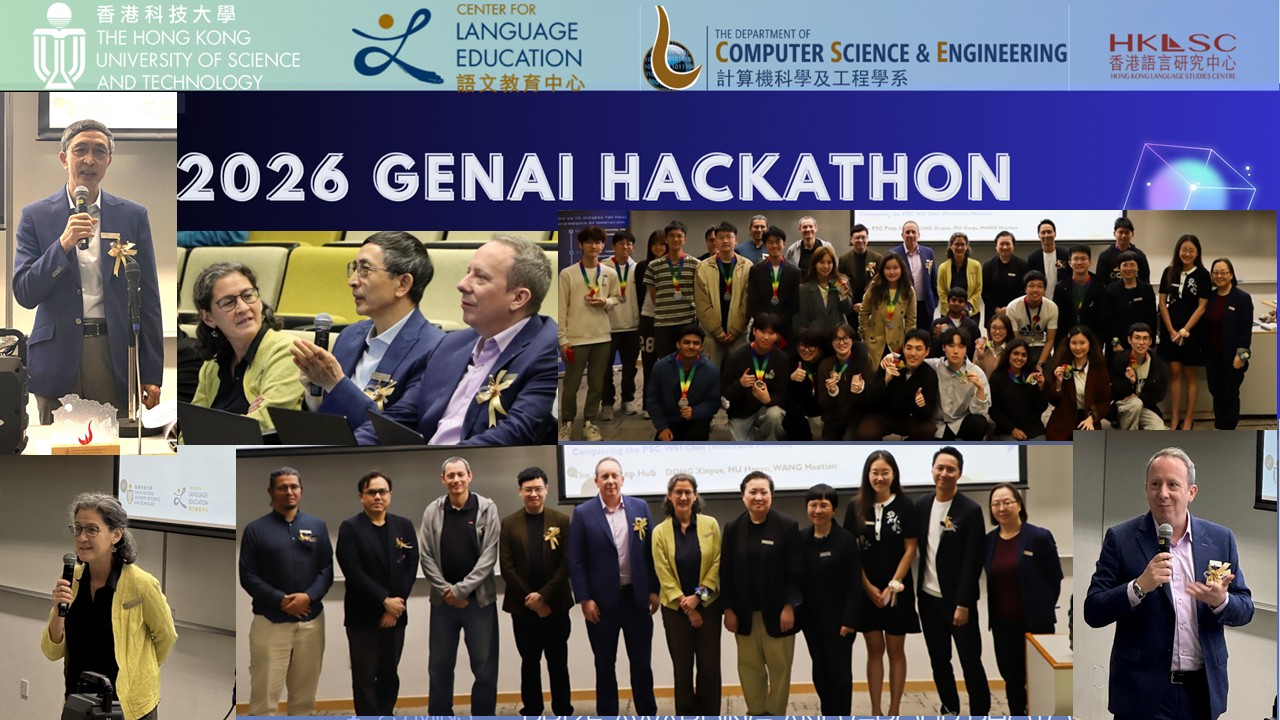
The final presentation and award ceremony of the 2026 GenAI Hackathon: Competition on a Putonghua Web Tool, co‑hosted by the Center for Language Education (CLE) and the Department of Computer Science and Engineering (CSE) of the HKUST, successfully took place on March 9, 2026.We were joined by our Guests of Honor, including Dean of SHSS Prof. LI Ping, Director of CLE Prof. Melinda Whong, and Director of CEI Dr. Sean McMinn. We were also delighted to welcome Ms. HOU Ming, Chief Managing Director the Hong Kong Language Studies Center (HKLSC), together with faculty and students from various departments of the University.
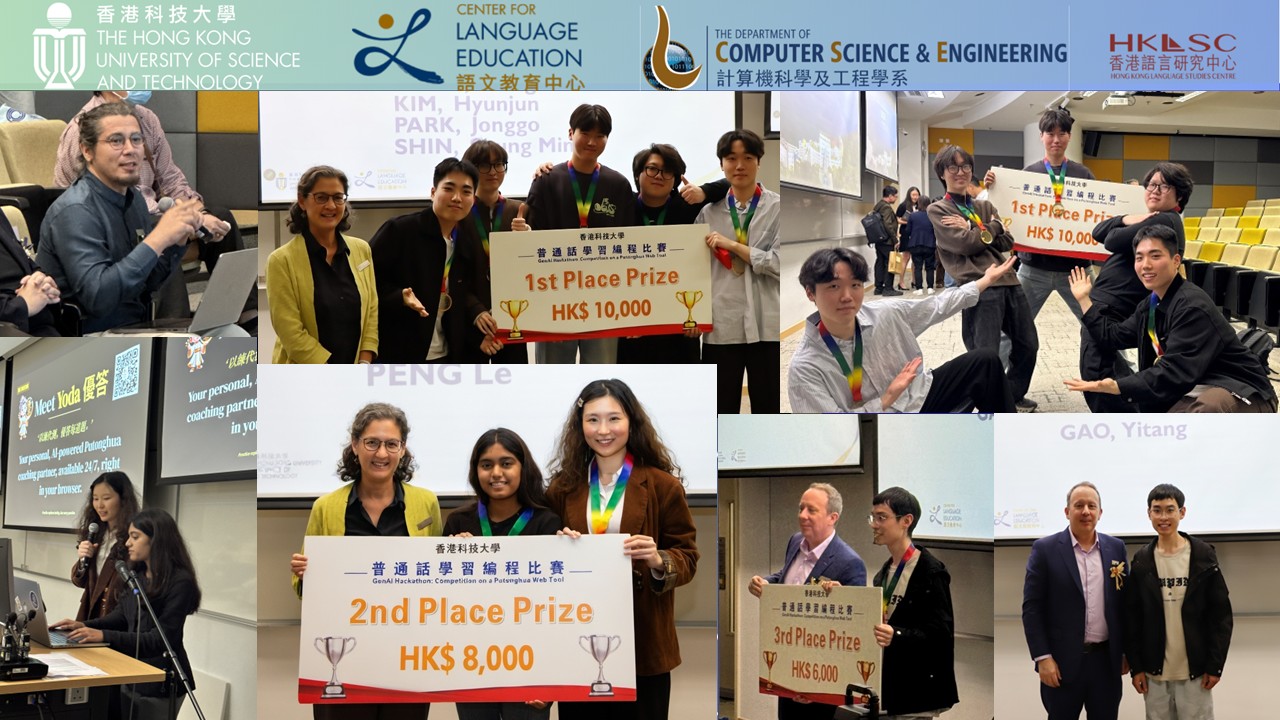
In the event, the Top 3 finalist teams showcased their innovative GenAI‑powered solutions, “Yoda優答, an AI-powered Putonghua coaching partner”, “PSC Coach, a bilingual smart coach for PSC Test”, and “XiYouQuest, AI PSC webtool as an RPG”. Their prototypes reflected an outstanding integration of technical excellence and pedagogical insight. The winning team stood out for its creative approach to enhancing students’ learning experience through AI‑driven feedback, empowering users to strengthen their skills and master official test content more effectively.
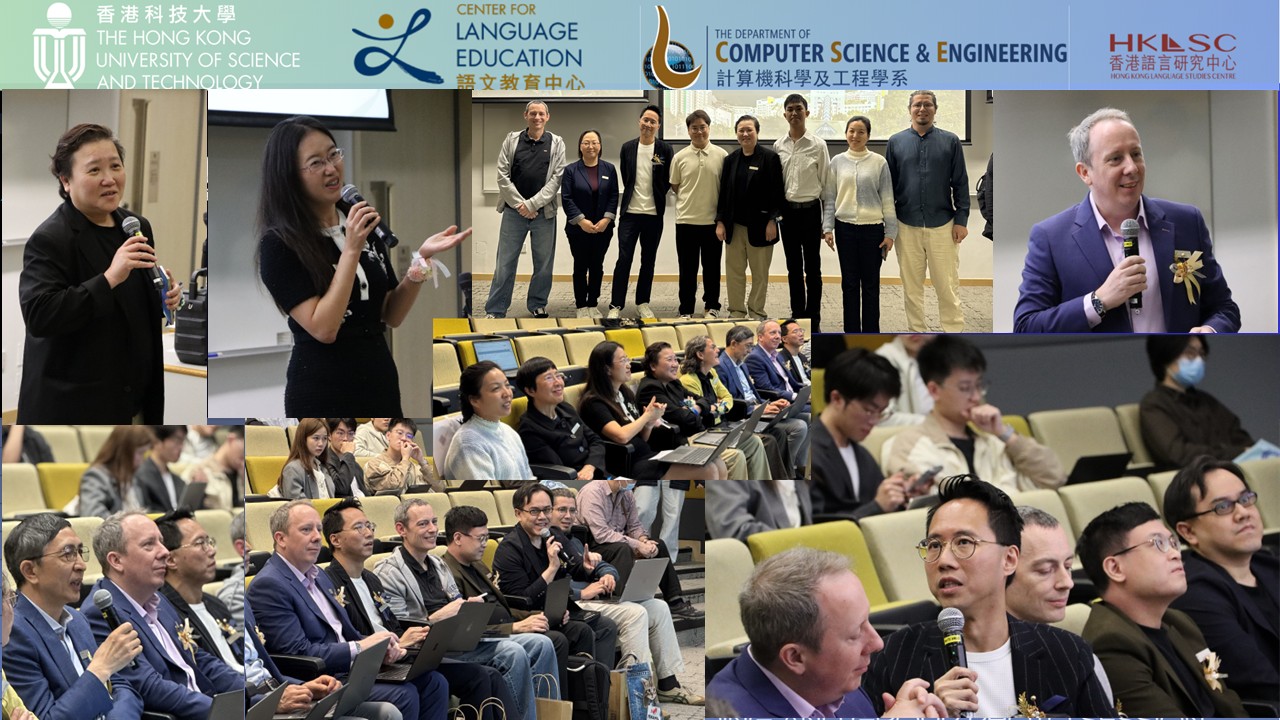
This year’s hackathon featured a judging panel with a range of expertise in artificial intelligence, language education, and engineering innovation. The panel comprised both external and internal practitioners, as well as teachers from CSE and CLE.
Launched in early February, the hackathon received a strong response, attracting over 90 talented undergraduate and postgraduate students who formed 30 competitive teams. Participants competed for a share of approximately HK$30,000 in cash prizes, developing GenAI tools designed to transform the way students learn Putonghua and Chinese in general.
The contest invited participants to design and develop an innovative GenAI web tool to support preparation for the Putonghua Proficiency Test (PSC), the national standard assessment for Putonghua oral proficiency, administered live by national certified examiners. The PSC comprises five sections contributing to a total score mapped to the official “six grades in three levels” proficiency scale.
Over the span of three weeks, we received 29 proposal submissions. After a rigorous evaluation process—assessing innovation, feasibility, impact, and technical merit—and an intensive 36‑hour development sprint, the judging panel shortlisted the Top 3 finalist teams for the final showcase.
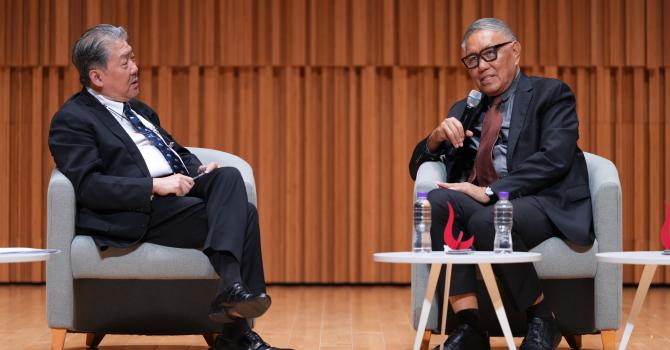
Prof. Li Ping officiated the ceremony, reflecting on his 1990s coding experience compared to today's AI capabilities, where questions can yield instant responses. While this advancement showcases significant progress, it also poses challenges, such as the potential decline in motivation to learn programming languages. AI offers many benefits but also raises ethical concerns about our reliance on it. This CLE event seeks to enhance our understanding of language learning by exploring the advantages and disadvantages of AI for our communities.
During her keynote speech, Prof. Melinda Whong, emphasized that developing intuitive communication technology is a complex undertaking. “We are proud of the dedication and skill our teams have shown in creating tools that make language more accessible and easier to use.”
Dr. Sean McMinn also said, “As we navigate a period of significant change, the relationship between AI and education is becoming increasingly symbiotic. This raises important considerations regarding the practical application of AI to facilitate learning.”
Mr. Peter Chung, from the judging panel, highlighted that witnessing the teams’ hard work and collaboration underscored how initiatives like this hackathon foster AI innovation and interdisciplinary collaboration on campus. SHIN Seung Min from the champion team, XiYouQuest, said, “In this GenAI era, with the creativity you have, nothing is impossible to realize your dream.”
At the conclusion of the event, Professor Cindy Xin Li and Professor Nora Hussin delivered closing remarks, commending the participants on their accomplishments within such a short timeframe. They expressed their appreciation for the participants’ ability to effectively target Cantonese speakers’ needs, leveraging the skills and resources available to them.
Congratulations to all participating teams for their remarkable creativity and dedication, and special thanks to the professional judging panel for their invaluable guidance and support to our students.
As part of its commitment to advancing language education at HKUST, the CLE continues to provide innovative learning experiences that build students’ communication skills and confidence for an increasingly global and AI‑enhanced world.