
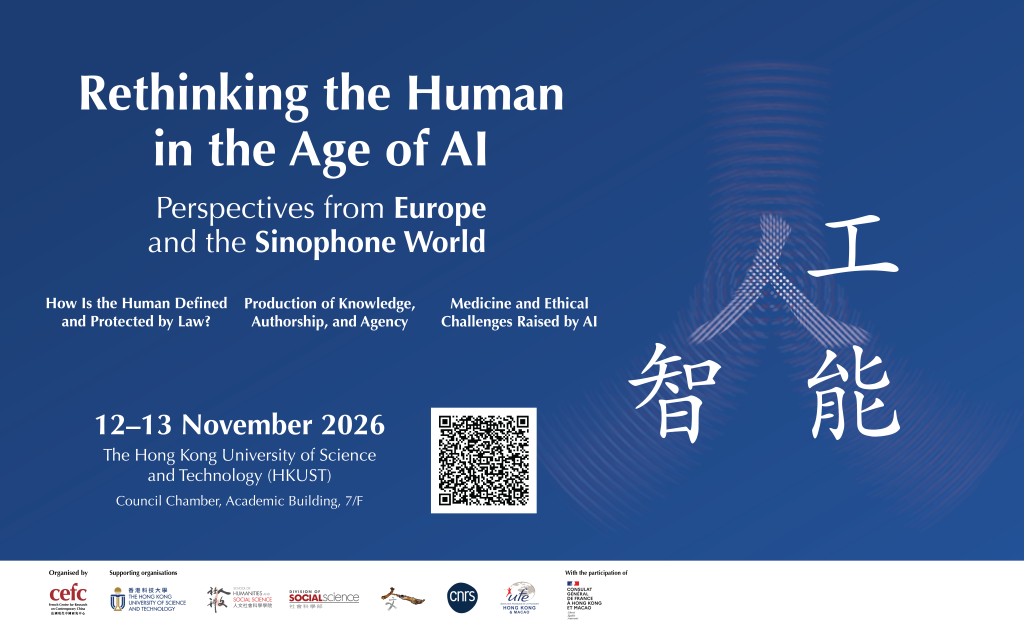
One of the defining features of modern societies is that humans themselves assume responsibility for deciding what counts as human. The possibility – whether real or imagined – that AI might one day relieve us of this task points to a different form of life, one in which this arrangement no longer appears self-evident.
In Europe and the Sinophone world alike, scholars, professionals, artists, and policymakers are increasingly debating the implications of these developments. Since these discussions do not always circulate across disciplinary, linguistic, and geographical boundaries, the French Centre for Research on Contemporary China (CEFC) is organising a two-day event to bring voices from both sides into dialogue.
Who should decide what counts as human today?
This question arises in a growing number of fields. In law, it concerns responsibility, rights, and the protection of human dignity. In education, publishing, science, and the arts, professionals are increasingly confronted with forms of production that challenge established understandings of authorship, creativity, expertise, and judgment. In medicine and healthcare, AI appears both as a potential response to major social challenges and as a source of new ethical dilemmas. In all these fields, AI not only raises practical questions; it also provides new models through which we imagine human capacities, limitations, and forms of agency.