HKUST and Partners Organize Digital Humanities Event to Expand Interdisciplinary Impact
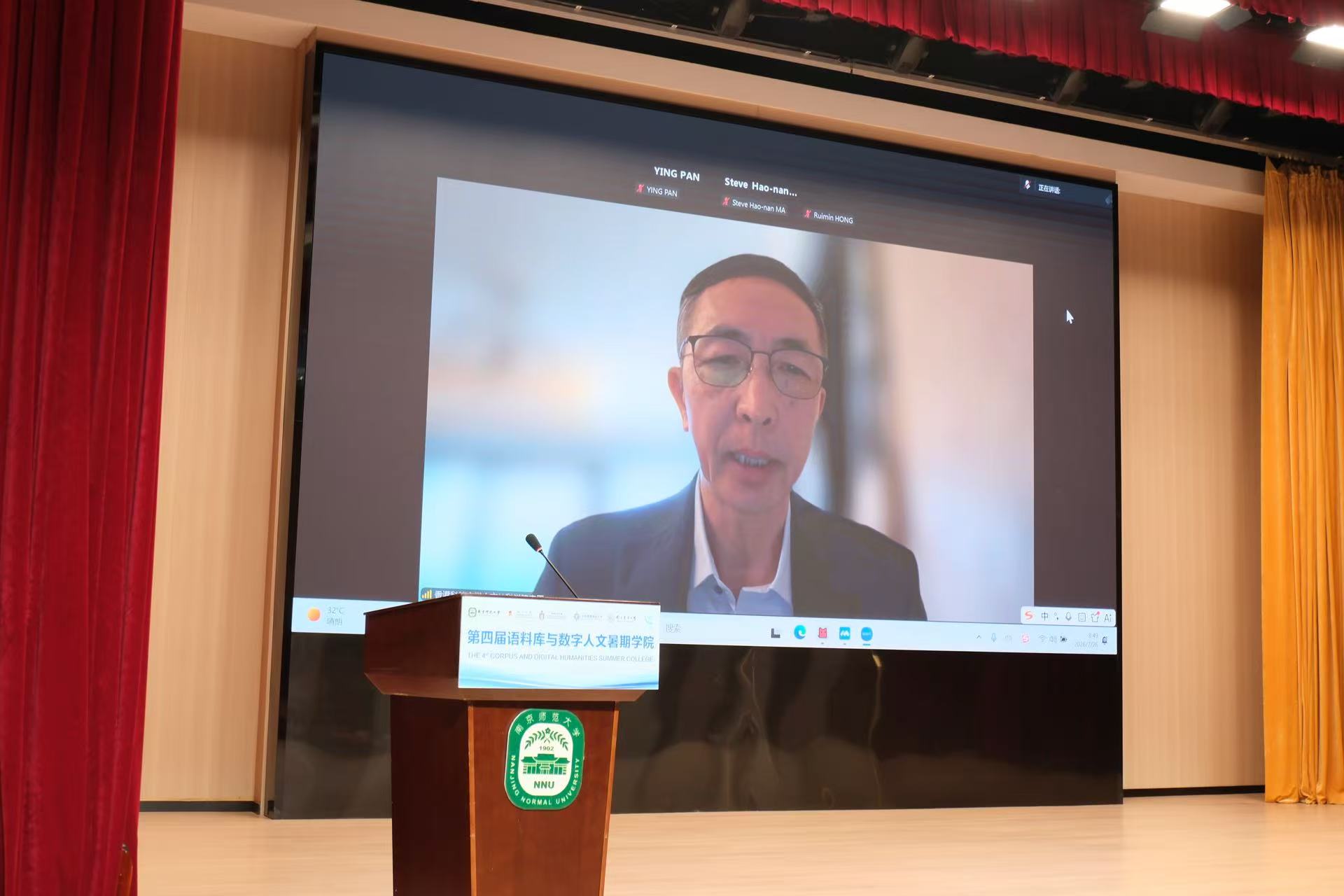
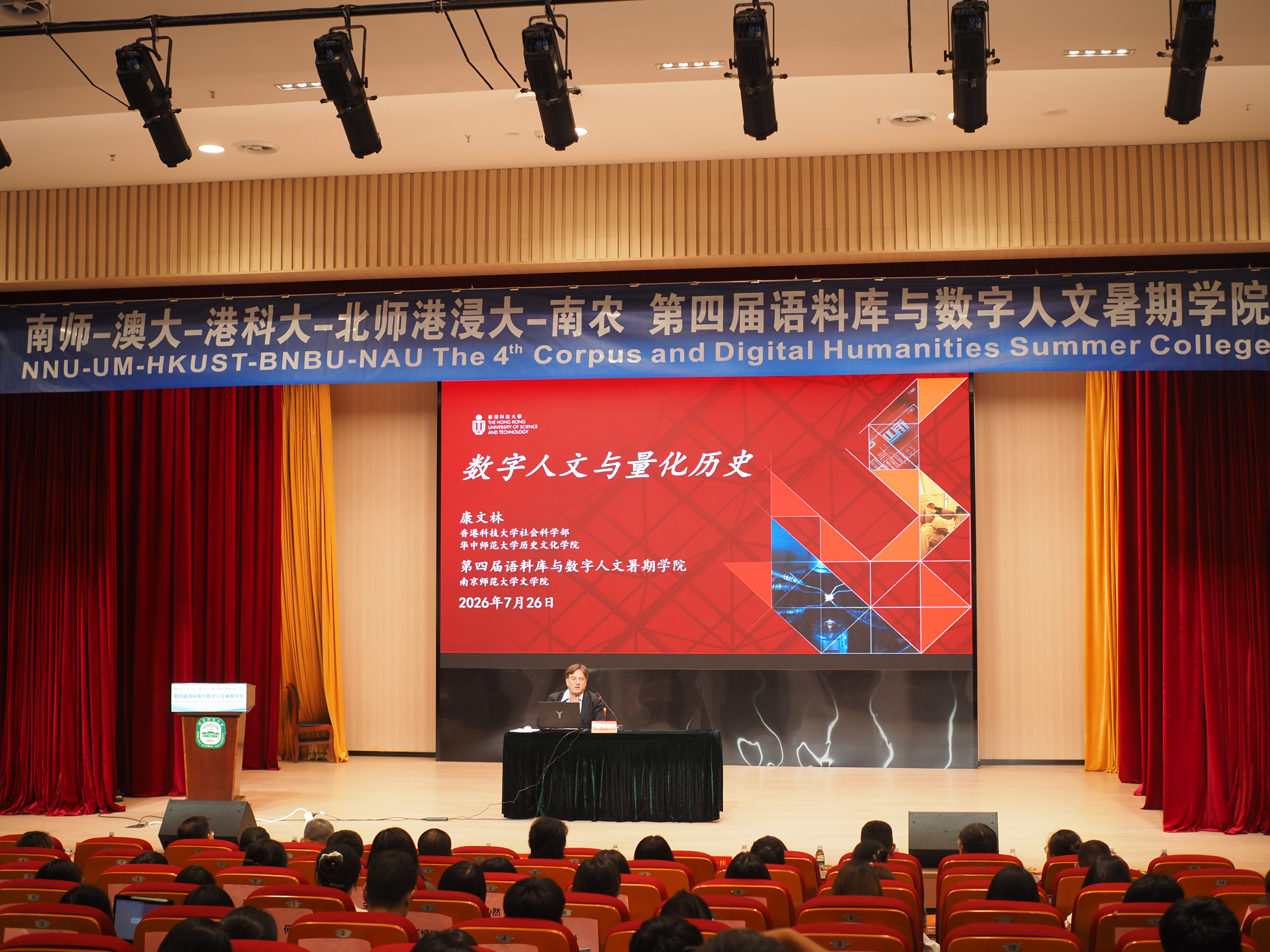
The Hong Kong University of Science and Technology (HKUST), in collaboration with Nanjing Normal University, the University of Macau, Beijing Normal-Hong Kong Baptist University, and Nanjing Agricultural University, successfully organized the 4th Summer College of Corpora and Digital Humanities (CDH Summer 2026) in Nanjing. The opening ceremony included an address by Prof. LI Ping, Dean of the School of Humanities and Social Science and Chair Professor of the Division of Social Science, and a keynote lecture by Prof. Cameron CAMPBELL, Chair Professor of the Division of Social Science, delivered to both in-person participants and thousands of online viewers.
Prof. Li Ping highlighted the unprecedented opportunities that artificial intelligence presents for the humanities and social sciences. Citing the recent Dean’s Forum on “Challenges and Opportunities for Humanities and Social Sciences in the Era of AI,” successfully organized by the School, Professor Li emphasized the growing importance of mastering digital humanities methodologies and AI technologies. He encouraged all participants to embrace new technologies with an open mind, examine them with a critical perspective, and engage them with humanistic insight. He also extended a warm welcome to scholars and experts from around the world to visit HKUST.
Prof. Cameron CAMPBELL reflected on over four decades of experience in quantitative historical analysis and digital humanities accumulated by the Lee-Campbell Research Group, which includes Emeritus Prof. James LEE and Prof. CAMPBELL, and other members from international partners. The team has contributed numerous well-known datasets based on primary sources to the academic community. He urged participants to employ computational humanities tools with rigor and a critical approach.
The opening ceremony also showcased a series of cutting-edge research outcomes in digital humanities. Prof. Michael Yan Hon CHUNG, Assistant Professor of the Division of Humanities, unveiled a newly trained Optical Character Recognition model for the Manchu script. This work not only demonstrates the latest AI achievements of HKUST’s digital humanities community but also serves as a model for research on low-resource and endangered languages.
Over the following days of the College, Prof. Thorben PELZER, Assistant Professor of the Division of Humanities, will share applications of AI in Chinese historical research, and Dr. Steve MA will discuss corpus applications in digital humanities research. These presentations will further underscore the world-class digital humanities education and research at HKUST to the global academic community.
Prof. BEN Guodong, Deputy Party Secretary of Nanjing Normal University; Prof. GUO Haipeng, Dean of the School of General Education at Beijing Normal-Hong Kong Baptist University; Prof. WANG Dongbo, Director of the Information Office and Associate Dean of the School of Information Management at Nanjing Agricultural University; and Prof. LI Bin, Director of the Research Center for Language Big Data and Computational Humanities at Nanjing Normal University, delivered addresses on behalf of their respective co-hosting institutions. Dozens of experts and scholars from over ten universities across Beijing, Macau, and other regions, along with representatives from China’s Ministry of Education and Ministry of Industry and Information Technology, joined the opening ceremony alongside hundreds of participants. The event also featured industry panels with representatives from Baidu, ByteDance, Alibaba, and Zhonghua Book Company, facilitating in-depth exchanges on practical industry experiences.
The Summer College of Corpora and Digital Humanities (CDH Summer) is currently the largest digital humanities summer school in Asia. Since its inception in 2024, the College has been held successfully three times, attracting over 3,000 students and researchers from more than 20 countries and regions worldwide. In June, the summer College was also officially included in the National Exemplary Cases of Language Technology Innovation Empowering Key Sectors of China, marking the highest recognition in China’s language technology sector.
The successful opening of the College reflects the active response of HKUST’s School of Humanities and Social Science and the Division of Humanities to the research and educational demands of the AI era, while promoting cross-cultural and interdisciplinary scholarship. The event will further strengthen the School’s leading position in digital humanities and related fields, showcase the creativity of the humanities community, and advance the implementation of HKUST’s Strategic Plan 2031.
科大與合作夥伴舉辦數碼人文盛事 拓展跨學科影響力
近日,香港科技大學(科大)與南京師範大學、澳門大學、北師香港浸會大學和南京農業大學攜手合作,於南京成功舉辦「第四屆語料庫與數字人文暑期學院」。開幕典禮上,科大人文社會科學學院院長、社會科學學部講座教授李平教授致開幕辭,社會科學學部講座教授康文林教授則發表主旨演講。
李平教授在致辭中指出,人工智能正為人文及社會科學研究帶來前所未有的機遇與變革。他以人文社會科學學院早前成功舉辦的「人工智能時代人文與社會科學的挑戰與機遇」院長論壇為例,強調掌握數碼人文方法與人工智能技術對新一代學者的重要意義。他勉勵全體學員,以開放態度擁抱新技術、以批判眼光審視新技術、以人文溫度駕馭新技術,並歡迎世界各地學者蒞臨科大交流合作。
康文林教授在其主旨演講中,回顧了「李-康研究團隊」四十多年來在量化歷史分析與數字人文領域的深厚積累。該團隊由榮休教授李中清教授和康文林教授等學者組成,多年來為學術界貢獻了大量基於原始資料的珍貴數據集。康教授鼓勵學員以嚴謹和批判的態度應用計算人文工具,在數碼時代延續人文研究的學術傳統。
開幕式還集中發布了多項數字人文領域的前沿成果。其中,人文學部助理教授鍾恩瀚教授正式發布其團隊最新訓練的滿文光學字符識別模型。該模型不僅體現了科大數字人文社群在人工智能領域的突破性進展,更為低資源瀕危語言的數碼化保護與研究提供了重要示範。在隨後的課程中,人文學部助理教授Thorben Pelzer教授將分享人工智能在中國歷史研究領域中的應用,講師馬郝楠博士將介紹語料庫在數字人文研究中的案例。講座將進一步向全球學界展現科大在數碼人文領域的頂尖水準。
開幕式同時邀請了各聯合主辦單位代表致辭,並參加啟動儀式,包括南京師範大學黨委副書記賁國棟教授、北師香港浸會大學通識教育學院院長郭海鵬教授,南京農業大學信息處處長、信息管理學院副院長王東波教授,以及南京師範大學語言大數據與計算人文研究中心主任李斌教授。來自北京、澳門等地的十餘所高校,以及中國教育部、工業和信息化部等單位的數十位專家學者與學員參與活動。活動亦邀請百度、字節跳動、阿里巴巴、中華書局古聯公司等業界代表參與座談,深入分享業界經驗。
「語料庫與數字人文暑期學院」為目前亞洲規模最大的數碼人文暑期學校。自2024年創辦以來,已成功舉辦三屆,累計吸引來自全球超過20個國家和地區的3,000餘名學生及科研人員報名參與。今年6月,暑期學院更入選中國「國家關鍵領域語言科技賦能創新項目案例」,標誌其獲得了中國語言科技領域的最高嘉獎。
本屆暑期學院的成功開幕,充分體現了人文社會科學學院及人文學部回應人工智能時代的研究與教育需求,促進跨文化、跨學科研究的努力。活動將繼續鞏固學院在數碼人文等領域的領先優勢,不斷展現人文學社群的創造力,並為科大《策略發展計劃2031》願景的實現貢獻力量。